#18 overallClassic
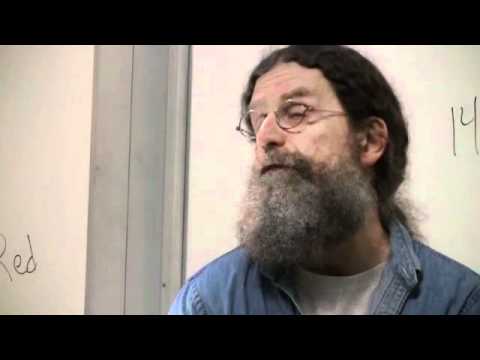
Human Behavioral Biology (Robert Sapolsky)
Stanford University
26 recommenders · 27 threads · recommended in 11 years, 2015–2026 · score 38.8
Robert Sapolsky's Stanford course on human behavioral biology, taught as a lecture series that explains behavior across levels from genes and brain chemistry to evolution and culture. The lectures are freely available on YouTube.
Commenters call it accessible, engaging, and deep, and several say it changed how they think about behavior, aggression, and depression.
CS Fundamentals & Systemsbeginnerfreevideo lectures#behavioral biology#neuroscience#evolution#stress#sapolsky
Recommendations by year
20062026
Natural selection had a say in female mammals leaking blood trails every month, which is, mildly said, fcking stupid. Natural selection does not create optimal beings, it creates stuff that, somehow, kinda, works. If you have the time for it, I highly recommend the lecture series on behavioral evolution by Robert Sapolsky, it's on the Stanford YouTube channel.
Determined: Life Without Free Will by Robert Sapolsky. He's a Stanford biologist/neuroscientist. You may have come across lectures from his class on Human Behavioral Biology which is on Youtube for free and highly recommended. The book basically lays out his argument that our actions are entirely the result of a deterministic combination of our genes, chemicals during fetal development, epigenetic factors during childhood and adolescence, brain trauma, diet, sleep, recent stress exposure, etc. Much of it motivated by his work as an expert witness in criminal trials, and concluding with his take on the "now what?" question on the moral/ethical implications of deciding that we don't really have as much (or any) control over our actions as we like to imagine.
for anyone unaware, this is a book by Stanford professor Robert Sapolsky:
https://en.wikipedia.org/wiki/Why_Zebras_Don%27t_Get_Ulcers
The book is about stress and the impact of glucocorticoids on the body. The chemical stress response used in "the wild" by animals is actually the same as the stress response we have when worrying about losing our job, not being able to complete a paper for school, dealing with poverty, etc. It's a partial explanation for why modern humans have so many chronic diseases that are rarely seen in other animals (or even archeological/anthropological evidence of non-industrial societies but he doesn't really go there much in the book)
I also highly recommend Sapolsky's Human Behavior Biology course which he taught for Stanford but published on YouTube:
https://www.youtube.com/watch?v=NNnIGh9g6fA
Q: How to be kind? A: To not be aggressive.
The problem is, depending on the environment and personal positions, kindness isn't necessarily the most useful option, and even if everyone likes it, kindness doesn't necessarily sustain itself.
The most important new information about aggression I've got in years is from Prof. Robert Sapolsky's lectures on Human Behavioral Biology. Mind blowing, totally recommend you watch it on Youtube.
In the conclusion to his 4-lecture series on the subject of aggression (https://youtu.be/BqP4_4kr7-0?t=6081), he says:
We have this general notion that if we are rational, if we are learned, if we are scholarly, if we respect thoughts and truth and all of that, we will make the world a better place.
All of us who are professorial have somewhere in there this totally ridiculous belief that if you're allowed to lecture at a subject long enough, it will give up and go away. And that will be the cure for the world aggression. If everybody could be lectured to about the frontal cortex, it will solve world violence. But the basic problem is that aggression is such a messy set of behaviors.
Schizophrenia - no question about it, bad news. Alzheimer's disease, childhood cancer, global warming, all of these unassailably bad news. But aggression is a whole lot more complicated, because of that point where we started with, which is, the same exact behaviors, and depending on the context, it could be something that would get a medal for someone, someone you will want to mate with, vote for, reward, cheer on, join in. And in another setting, it is the most frightening thing that can happen to us. And it's the same behaviors in all those cases.
And it's for that reason, that violence is going to be the hardest subject for us to understand biologically. And it's for that reason, that it's always going to be the one we have to try hardest to understand.
Speaking of Sapolsky - his lectures from his Human Behavioral Biology course at Stanford are on youtube and they are fantastic.
I watched his 25-part Biology of Human Behavior (Stanford U.) course years ago, it's the best course I've ever done. Maybe covers a lot of the same ground. He's a great lecturer! Very funny and a great storyteller. There's a lot on how brains work, how genes work, and then all the levels science studies human (and animal) behaviour - e.g. "Why did they do that?" can be explained by what happened a millisecond ago, or a few seconds ago, or that morning, or .. (a dozen levels omitted) ... millions of years ago.
Lecture I https://www.youtube.com/watch?v=NNnIGh9g6fA
If people are interested in exploring this topic, I would highly recommend Robert Sapolsky's course "Human Behavioral Biology" from stanford. The lectures are all available on YouTube and I learned so much from them:
https://www.youtube.com/watch?v=NNnIGh9g6fA&list=PL848F2368C...
Epigenetics for example show that certain gene switches are passed on between generations. Rat mothers that experience anxiety pass this on to their offspring. There is this whole lecture on behavioral biology by Stanford Prof Robert Sapolsky which I highly recommend: https://www.youtube.com/playlist?list=PLD7E21BF91F3F9683 Anyway I think having a clear understanding on where you are coming from, with acceptance, is a requirement for moving into the future with the best of your abilities.
Ray's Tierra (early 1990s) was a fascinating experiment with this. Its DNA are little assembler-like programs telling the 'creatures' how to reproduce, how to copy their genes. Many kinds of parasites evolved. I believe no-one had tried randomly mutating genetic info like that before Tierra.
https://en.wikipedia.org/wiki/Tierra_(computer_simulation)
http://life.ou.edu/pubs/doc/index.html#What
I recommend Sapolsky's Biology of Human Behavior course - accessible to beginners, it goes into a lot of detail about DNA, genes, the brain, emotions, sexual selection, evolution, and the many other levels involved in animal and human behaviour.
https://www.youtube.com/watch?v=NNnIGh9g6fA&list=PL848F2368C...
Currently enjoying the 2017 lectures (and I bought the text) for McElreath's bayesian stats course:
http://xcelab.net/rm/statistical-rethinking/
Strang's MIT OCW Linear Algebra is pretty good. Probably also needs the textbook.
John Tsitsiklis' MITx edx Probability intro course is probably the best course I've taken anywhere and better than anything I did in person at university. I didn't buy the text for this one though I probably should.
Robert Sapolsky's Human Behavioral Biology Stanford lectures are well worth watching. https://www.youtube.com/playlist?list=PL848F2368C90DDC3D
Be well versed in genetics / molecular biology! - If I had the time to finish school, I'd double in biology / math or CS. Man will that be a killer combo when that kid is 30.
It feels like biotech is where computing was in the 1930's... what's to come, and how it will change the world is both frightening and exciting.
On the "soft" side (whatever that means): ethics, the history of ethics, from every point of view.
Two lecture series I always recommend, and feel like everyone should watch with a gun to their head (as the instructor himself says):
- https://www.youtube.com/watch?v=kBdfcR-8hEY -- Harvard course on justice / ethics.
- https://youtu.be/NNnIGh9g6fA -- Robert Saposky (and guests) on the biology of human behavior.
Literary theory. Gaining a deeper understanding of how masters of symbolism, language, and creativity think and put together their work; the history of literature; etc. will open you up to new ways of thinking just like studying pure maths or programming would.
Now to invent a time machine and give myself this advice! Boy I could've used it.
Can't speak to the previous comment's intent, but I find that all of Sapolsky's lectures and interviews are fantastic to listen to, as well as his podcast with his daughter called Father-Offspring interviews where she poses a submitted question to him and he answers in brief (or not so brief) about the biological/psychological/sociological implications of the question. Fascinating stuff.
There's an excellent series of lectures from Stanford's Robert Sapolsky [1] about Human Behavioral Biology. While not about ants or insects, he brings up various examples from different species to explain the crazy "optimization war" of evolution. It's mind-expanding to learn about the many mechanisms at work - much more than just what can be encoded and passed on with genes.
[1] https://www.youtube.com/playlist?list=PL848F2368C90DDC3D
It's true and derogatory. But it's just derogatory for humans who have an exaggerated view on themselves. Stanford's Robert Sapolsky had an excellent course on Behavioural Biology. You can watch it for free.
This is well known and well studied. I highly recommend Sapolksy’s lecture on this: https://youtu.be/SIOQgY1tqrU?feature=shared
Start at 12:14 for the relevant topic, but the entire lecture is a good watch.
No, but I haven't tried professionals or medication. I watched a number of Stanford lectures on psychiatry and while I was rabidly against medications (unless they had a street value because that indicates they do something that people value), I found the lectures pretty convincing and they changed my mind. Sapolsky in particular has some great lectures.
That's a fun bit of ambiguity. Am I saying help a [person with emotional regulation] or help a [person] with [emotional regulation]? I meant help a person regulate their emotions.
Running on empty talks about it. I can't say I am sold on her treatment protocol which involves work including writing reflections focused on bringing attention to emotions and being able to better describe them.
But yeah, blunted emotions and dis-regulation inhibit the ability to do work. It creates comfort seeking behavior rather than growth seeking behavior. If you can't imagine emotional payoff, how are you going to motivate work? Not work like a job, but work like learning to read sheet music, or put yourself in social situations where you might face rejection.
I think the authors core idea was that emotional neglect as a child creates a situation were you de-value your emotions (because you don't want to burden a parent with them, for example), which creates suppression and blunting of emotions, which then manifests in all types of mal-adaptions which ultimately creates a situation where the fuel for life, emotions, isn't there and then you feel like you are "running on empty."
The author explicitly states that emotions are that fuel. Emotions are what prevents a person from feeling like they are out of fuel.
I think there is a class of people for which they are looking for "fuel" to their life, and I think that is the same thing as looking for "meaning."
So taking the idea that meaning is emotions, lack of emotional regulation makes it hard to feel the feelings you want, which is nearly tautological.
So the question becomes "Do I have trouble finding meaning because I have suppressed my emotions?" I certainly figured out quite young that it's easier to stop wanting something than to seek it out and struggle or fail, particularly without help. Do I really not want the thing, or was my desire suppressed? Would there be meaning in me getting it? Would there be meaning in seeking it out? Even if I suppressed my desires, is that desire still there? Have I suppressed my desire for meaning because the work is onerous?
I am not sure if those are the right questions or what the answers are but I think they poke in the emotional regulation/work/meaning/emotions direction and start sketching a framework upon which to think about the problem.
I recommend her book. I thought it was going to be a slog, but 1-2 chapters in and I felt like I was reading my own biography, I read it in a day. It's pretty mechanical rather than wishy-washy. Most concepts are well defined and technical in nature. She doesn't make many appeals to intuition and everything is pretty "cause and effect".
Actually, there are many species who share the burden of child rearing equally. It is often a matter of resource availability, if food is scarce, males become aggressive and patriarchal structures emerge more prominently, and vice versa. Human history has been harsh, so it is not surprising that our ancestors tended to that type of society.
So, it is simply not true “across all” anything. I will forego badly parroting what actual experts say, so instead I recommend Robert Sapolsky’s lectures on this in his biology courses at Stanford. They’re available on YouTube.
I also notice you just vaguely referred to various animals in instead of humans, which is curious.
My position here, to be clear, is that there are gender differences in personality and phenotype, but they are mostly inconsequential for child rearing in a resource-rich society, ie, both genders are equally competent parents. Individual variation outweighs gender differences.
Check out Robert Sapolsky’s lectures https://youtube.com/playlist?list=PL150326949691B199
In books and lectures available on YouTube, Robert Sapolsky really goes in to nature, nurture, and the effects of both which clearly rejects "it doesn't matter how you raise your kids" but also underlines that there are also strong genetic factors that you have little opportunity to change. Your future is not written in your genetics, nor are you a blank slate, a lump of clay free to mold into anything.
Genetics gives you a range of possibilities, experience gives you a path through them.
There is an understandable but wrong motivation to free people from the guilt of any of their actions by saying things like "it doesn't matter". Yes, we do need to reject the extreme helicopter-parent attempt to achieve perfection, it's toxic and not all that helpful. Doing it by claiming nothing matters at all is wrong.
Sapolsky has several good series of lectures on The Great Courses, an into human behavior Stanford course on YouTube https://www.youtube.com/watch?v=NNnIGh9g6fA , and a few books including Behave. (there is a lot of overlap between all of these, you'll get bored hearing the same thing if you consume multiples)
I understand this quesiton, but it is an ignorant and insulting one. Though I do not suggest it was intended that way.
It is unfortunate that the term "depression" is used frequently for things that are not really depression.
I highly recommend this lecture by Stanford's Sapolsky On Depression to understand the difference. He will do so far more articulatly than I ever could.
As a person intimately familiar with depression as it has been with me for decades and it is still deeply inside of me the answer to your question is “No”.
Depression is hell. It sits inside you. You cannot run from it, you cannot hide from it. Whatever you do it is still inside you and it does not let up and it tortures you continuously.
It does -not- improve by going for a walk. It does not go away with social interaction. It does not go away by not eating.
It turns the entire world bleak.
I have to time my interaction with other people carefully, so I won’t start screaming before I am alone again.
Asking a depressed person to “go for a walk”, “exercise” and things will be better is absurd. It Is like asking person in a wheel chair to get up and go for a run,
It is also the standard reaction from people once they hear “you are depressed”. They have no idea whatsoever what they are talking about, and I wish people would just stop it. Don’t you think if it was that f…ing simple I would have done it a long time ago.
I feel a deep need to scream at a person who suggests it, but you can’t do that in this society.
If I could put a finger on them and let them experience what is inside me for a moment they would be the one running away screaming.
For what it's worth, Dr. Robert Sapolsky, who wrote one of the books that this article draws on, has a fascinating set of lectures, free online, from his Human Behavioral Biology course at Stanford[1].
I personally haven't listened to it in very great detail as if I were taking the course, but I often skip around to listen to the dissections of various aspects of human behavior.
[1]: https://www.youtube.com/playlist?list=PLD7E21BF91F3F9683
Stanford's Sapolsky does a pretty good job explaining what is and isn't. I recommend the full lecture, it's interesting stuff: https://www.youtube.com/watch?v=NOAgplgTxfc
It's not a book, but a great infotainment lecture series by Robert Sapolsky (the intro to human biology course at Stanford, 2010)
https://m.youtube.com/playlist?list=PL848F2368C90DDC3D
And of course cites Sack, and a lot of amazing research/studies/results.
The caveat is that some results are not that solid, and he mentions priming, which we know does not replicate.
Trial and error as a programmer dealing with depression and anxiety accounts for a lot, but for resources I'd point you to Robert Sapolsky's lectures on Behavioral Biology (here: https://youtu.be/NNnIGh9g6fA). Sapolsky's lectures are great for getting a Biology perspective to how human's operate. Jordan Peterson's has lectures on Personality (here: https://youtu.be/kYYJlNbV1OM) which are also great and echo similar ideas from a Psychology perspective.
Check out Saplosky's lectures on Youtube, he deals with this question. Particularly this one: https://www.youtube.com/watch?v=_dRXA1_e30o
If I remember correctly, when you learn a new language after age 10, the brain encodes the new language in a region adjacent to the one where your mother language is encoded, which means that any localized injury on this part of the brain may impact your ability to speak just one of them.
Source: Sapolsky's lecture about language: https://www.youtube.com/watch?v=SIOQgY1tqrU&list=PL150326949...
If you want to understand better how the brain works, I really recommend watching the whole course.
rewards are strongly tied to dopamine release in the brain. suggest watching Ropert Sapolsky's lectures on Human Behavioral Biology [1]. i learned alot from them. i keep rewatching/relistening to his lectures and every time i learn something new.
[1] https://www.youtube.com/watch?v=NNnIGh9g6fA
Check out Sapolsky's human behavior lectures on YouTube.
Came here to suggest Robert Sapolsky's class as well.
I would also add Michael Sandel's Justice: What's the right thing to do? https://www.youtube.com/watch?v=kBdfcR-8hEY&list=PL15D875D84... great course on moral reasoning, covers different theories of justice based on ideas from Aristotle, Kant, John Stuart Mill, John Rawls and many more, extremely well presented too.